

Motorway Madness
As the number of drivers on the road increases per year, the government has seen an increase in minor and major road accidents, especially coming from motorways. So it is important that new and current drivers understand the motorway rules whilst driving.
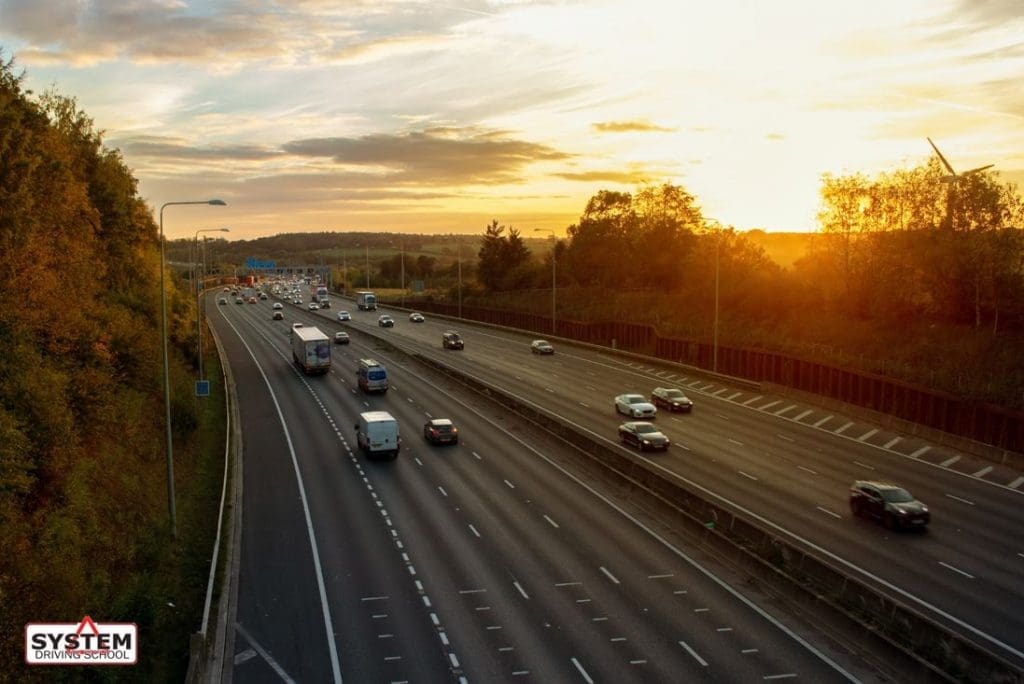
Lane rules
Motorways typically have three or more lanes:
Lane one – the left lane – is for normal driving.
All other lanes are for overtaking only.
Keep to lane one unless there’s a build-up of slow-moving vehicles in that lane when you can move over to one of the other lanes. However, you shouldn’t stay there longer than necessary, particularly if you’re holding up traffic.
Some motorways have just two lanes, like a dual carriageway, with the right-hand lane for overtaking. Others have four lanes. Whatever the number of lanes, those to the right of the inside lane is for overtaking.
A motorway on a steep hill may have an additional crawler lane for heavy vehicles, which lose a lot of speed as they climb up a steep gradient. Segregating these vehicles allows the rest of the traffic to flow more freely.
When you should use the hard shoulder
Motorways also have a narrower emergency lane to the left of lane one, separated by a solid white line. This part of the motorway – the hard shoulder – is an area where you can only stop in the event of a breakdown or emergency:
When your car has broken down
When there’s an emergency
If the police tell you to
How you should use the hard shoulder
Pull onto the hard shoulder if you can’t make it to a service station – try to stop near an emergency SOS phone if you can
Park as far to the left as possible, with your wheels turned away from traffic
Put on your hazard lights to help other drivers see you’re there
Get out of your car from the left passenger door and stand on the verge, as far away from the traffic as possible
Use an emergency SOS phone or your own phone to call for help
Stay behind the barrier, as far away from traffic as possible
Can you use a warning triangle
For other types of roads, you can put a warning triangle on the road at least 45 meters (147 feet) behind your broken-down vehicle on the same side of the road, or use other permitted warning devices if you have them – always take great care when placing or retrieving them, but never use them on motorways.
Smart motorways
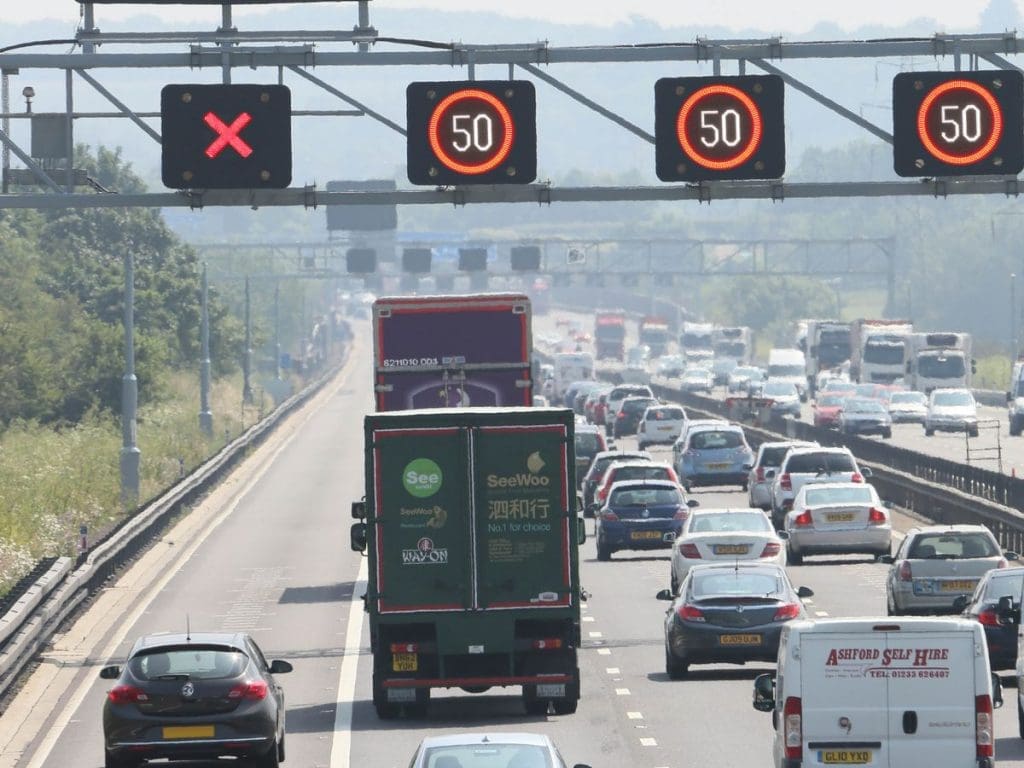
A smart motorway is a section of a motorway that uses traffic management methods to increase capacity and reduce congestion in particularly busy areas.
These methods include using the hard shoulder as a running lane and using variable speed limits to control the flow of traffic.
Red X – Regardless of where you see the sign, either on a normal traffic lane or on a hard shoulder on a motorway hard shoulder, it simply means do not drive in the lane – it has been closed to traffic.